
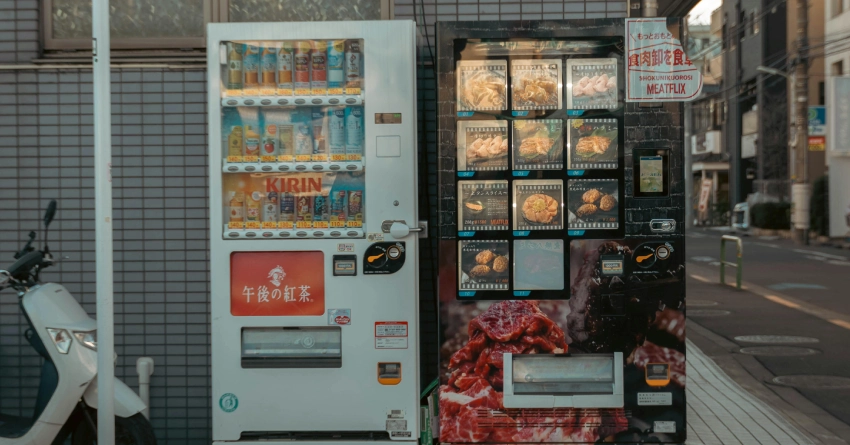
In many countries, vending machines are background objects—ignored unless you’re desperate for a soda. In Japan, they are something else entirely. They are companions on empty streets at midnight, quiet helpers during long workdays, and familiar landmarks in neighborhoods where little else stays open. To understand Japan’s vending machines is to understand how the country solves everyday problems with subtle intelligence rather than spectacle.
Japan does not treat vending machines as shortcuts. Instead, it treats them as extensions of daily life. That mindset is what transformed a simple concept—insert money, receive product—into one of the most recognizable symbols of modern Japan.
A Country Where Availability Matters
Japan runs on availability. Trains arrive on time. Stores open early and close late. Services are designed to work smoothly whether someone is rushing or moving slowly. Vending machines fit perfectly into this rhythm.
What makes them essential is not novelty but reliability. A vending machine in Japan works exactly as expected. The drink is the correct temperature, the button responds immediately, and the change returns accurately. These small certainties matter in a society that values precision and predictability.
For people commuting long distances, vending machines become dependable checkpoints—before entering a train station, outside an office building, or near a residential block. They quietly eliminate friction from daily routines.
More Than a Purchase, Less Than a Store
Japanese vending machines sit in an interesting middle space. They offer more care than a typical machine elsewhere but demand less effort than a shop. This balance explains their success.
Instead of overwhelming customers with options, machines present a carefully curated selection. Each product has a reason for being there. A machine near a school might stock juices and sports drinks, while one near an office favors canned coffee and tea.
The result is a system that feels surprisingly personal, even though no human interaction is involved.
Temperature as an Experience
One of the most distinctive features of Japanese vending machines is temperature control. This is not a gimmick; it is a cultural consideration.
Hot drinks are not seasonal novelties—they are standard. A can of coffee warmed from the inside is comforting during winter mornings, while summer machines focus on deep refrigeration. Temperature becomes part of the experience, not an afterthought.
Why Trust Makes Everything Possible
Vending machines only work at this scale because of social trust. Machines stand unguarded on sidewalks, near fields, and outside empty buildings. They are rarely damaged, and products are rarely stolen.
This trust flows in both directions. Customers trust the machine to deliver safe items, and operators trust people to behave responsibly. That mutual expectation makes unattended access possible.
Machines That Adapt Without Announcing It
Japanese vending machines are quietly intelligent. They do not advertise their technology, but it operates constantly in the background.
Modern machines track purchasing patterns, adjust restocking schedules, and subtly reorganize products based on demand. The technology serves without demanding attention, which aligns with Japan’s design philosophy.
Seasonal Curiosity and Limited-Time Culture
Vending machines remain exciting because of their relationship with seasonality. Drinks rotate frequently, and limited-time flavors encourage experimentation.
People try new products not because of heavy advertising, but because they may not be available tomorrow. The machine becomes a place of small discovery.
Vending Machines in Times of Crisis
Japan’s experience with natural disasters has shaped vending machine design. Some machines are equipped to act as emergency supply points.
During earthquakes or power outages, selected machines can release water or drinks free of charge. They quietly support communities when normal systems fail.
Cleanliness Without Enforcement
Despite limited public trash bins, vending machine areas remain clean. This is not enforced by surveillance but maintained through shared social responsibility.
People carry empty cans until they find proper disposal. Machines are kept clean because the space around them reflects the neighborhood itself.
A Reflection of Work Culture
Japan’s demanding work culture contributes heavily to vending machine use. Long hours and tight schedules leave little time for traditional shopping.
Late-night workers, early commuters, and essential staff rely on vending machines for consistent access without human staffing.
Why Japan’s Vending Machines Are Unique
Japan did not invent vending machines, but it perfected their integration into society. The machines succeed because they respect time, space, and expectations.
They operate on a simple promise: be available, be dependable, and remain unobtrusive. In a noisy world, Japan’s vending machines offer something rare—quiet usefulness.